You light a candle, sit down, pen in hand, notebook open, and you see the same things you wrote last Tuesday staring back at you. “I am grateful for my family. I am grateful for my health. I am grateful for….” You do mean what you wrote. But somewhere around the fifteenth time you've written down all the things you are grateful for, it started to feel less like appreciation and more like a duty.
This is a sign that your gratitude practice has outgrown its container and needs a little refresh. In this article I’ll show you how to make a gratitude practice really work for you.
TL;DR
• Why the standard gratitude lists can lose their effect, and what research says about why quality matters more than quantity
• The neuroscience behind gratitude and mood, including what happens in your brain when you practice gratitude consistently
• How Internal Family Systems (IFS) therapy offers a different lens on gratitude, especially if your mind is always in problem-solving mode
• A set of journalling prompts across different categories to help you go deeper than the basics
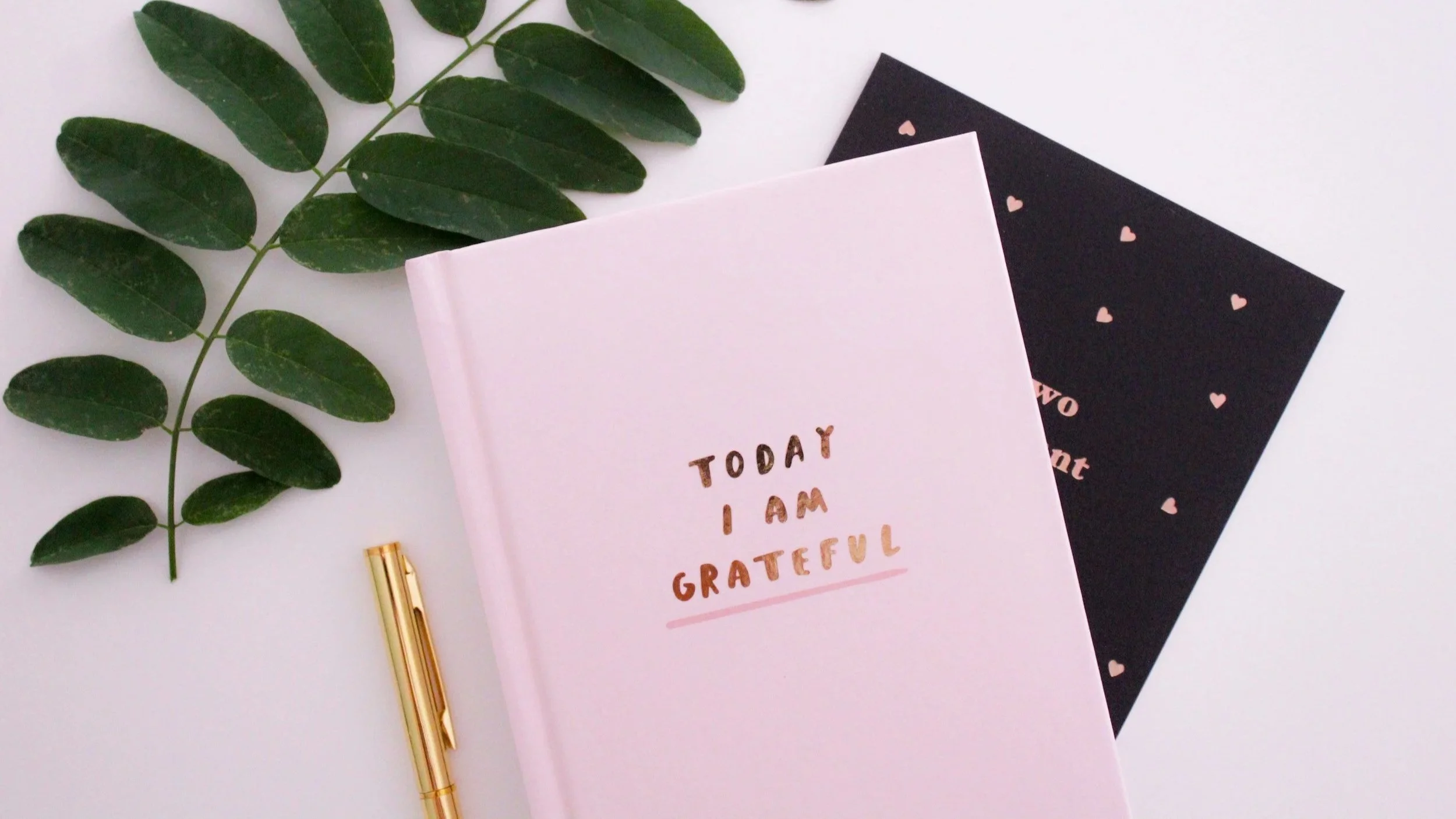
Why I love gratitude (as a therapist)
A gratitude practice is one of the most well-researched tools in positive psychology. Consistent practice is linked to lower anxiety and depression, improved mood, better sleep, and measurable changes in brain activity.
When you experience genuine gratitude, something specific happens neurologically. fMRI studies show activation the same reward pathways involved in social bonding and motivation. Your brain also gets a hit of dopamine and serotonin, the neurotransmitters that antidepressant medications are designed to support.
Dr Alex Korb at UCLA noted something particularly interesting: the act of searching for something to be grateful for, even before you find it, stimulates serotonin production. The looking for reasons to be grateful itself changes brain chemistry.
What makes the difference between a gratitude practice that shifts your baseline and one that doesn't is whether it produces genuine felt appreciation. Your brain responds to the real feeling of being thankful (not the list alone).
Why Gratitude Practices Can Fall Short
There's a version of gratitude practice that you may have tried: you write the things you should be grateful for, you tick the box, and it feels … flat.
Research supports what many people discover on their own: vague, repetitive entries produce weaker results than specific, felt ones. A landmark study into gratitude found that people who wrote about what they were grateful for in genuine detail showed significantly greater wellbeing than those who went through the motions.
The depth of engagement in the practice of gratitude mattered as much as the act itself.
What most people call "going through the motions" is actually the nervous system learning to treat gratitude as background noise. The more familiar a stimulus, the less the brain responds to it. Write "I am grateful for my family" every day without actually pausing to feel anything specific, and you'll eventually write it the same way you put your seatbelt on - automatically, without presence.
Presence is, it turns out, the whole point of gratitude.

Presence Is Where Gratitude Lives
Most of us spend a fair amount of our mental life somewhere other than right now. We're running through tomorrow's schedule, replaying a conversation from last week, or worrying about something that might happen.
Gratitude interrupts that pattern by directing attention toward what is actually here.
Gratitude invites you to stop, drop in and notice good things that we don’t give a lot of thought to. This could be the particular quality of light this morning. The person who said something kind to you, or the soft gaze of a pet who adores you.
The focus and quality of your attention creates your experience of reality. For most people dealing with anxiety or low mood, unattended attention drifts toward threat, toward what's missing, toward what could go wrong. Gratitude is a way of interrupting and reorienting this attentional bias to what is wrong, and turns our awareness to what is right.
Creating a Gratitude Practice That Works
Research and clinical work provide clear guidance on what makes a gratitude work (and stick):
Specificity beats volume. One genuine, specific observation of what you are grateful for is worth more than ten automatic entries. "I'm grateful for my dog" lands differently than "I'm grateful that when I came home upset on Thursday, she put her head on my knee and was just there for me."
Research consistently shows that practicing three to five times per week produces stronger effects than daily practice for many people. Daily practice is good, but daily rote practice is less useful than occasional genuine practice. Choose presence over frequency.
Both morning and evening practice have different benefits. A morning practice can orient attention before the day gets busy. An evening reflection on what went well helps consolidate positive experience before sleep, which research links to improved sleep quality. Many people find both valuable.
A gratitude practice may involve verbally (out loud or silently) reflecting on what you are grateful for. (I like to do this in the car listening to good music!) A written gratitude practice (journalling) is an equally powerful way of stopping, dropping into presence and documenting the goodness that is already here.
Gratitude Journalling Prompts
These prompts are for people who want to create a gratitude practice or for those who have outgrown "I'm grateful for..." lists and want something with more depth and reach.
Pick two or three prompts (or more if you have time) and write about what comes to mind in your journal. As you do, drop into a feeling of genuine appreciation and gratitude.
Presence and the senses
A beautiful colour, texture or light that caught your attention…
What did you eat or drink that tasted better than expected?
A moment when you felt at ease in your body….
A sight, sound or aroma that reminds me why life is so special…
Relationships
Something uplifting someone said or did….
Who showed up for you this week with kindness?
A moment when you felt genuinely seen or understood….
What is something you appreciate about someone in your life?
A reason I truly value my community (or friends/family)….
Yourself
Where did you handle something better than you expected?
A challenging experience that helped me grow into a better version….
One way my life is better now than it was in the past….
An memory I always treasure….
A quality I have that I am proud of…
What went well today
The best moment of today….
One reason I cherish this time of year….
Today was better than yesterday because….
What’s one good thing that happened today that you’d like to remember?
Ready to work on this with support?
If you've been managing anxiety or depression, and self-help hasn’t quite shifted things, that's often when a different kind of support becomes genuinely useful. Gratitude practices work best as part of a broader approach, one that also looks at what's underneath the patterns you're trying to change.
I offer compassionate therapy for adults in Brisbane and via telehealth across Australia (and internationally). I draw on Internal Family Systems, Acceptance and Commitment Therapy, somatic approaches, and what will work for you.
If you're curious about what that might look like, you're welcome to book a free 20-minute connection call. (No commitment, just an easy conversation).
About the Author
Corene Crossin is an Australian registered psychotherapist and IFS practitioner based in Brisbane, offering online Internal Family Systems therapy to clients across Australia and internationally. She works with thoughtful adults who are ready to explore longstanding patterns around relationships, attachment, self-sabotage, body image, and inner criticism.
Her approach is trauma-informed, collaborative, and rooted in compassion. She believes that lasting change becomes possible when you feel safe enough to be fully seen, including by yourself.
Explore other articles:
How to deal with your Inner Critic
