How to deal with your Inner Critic with IFS
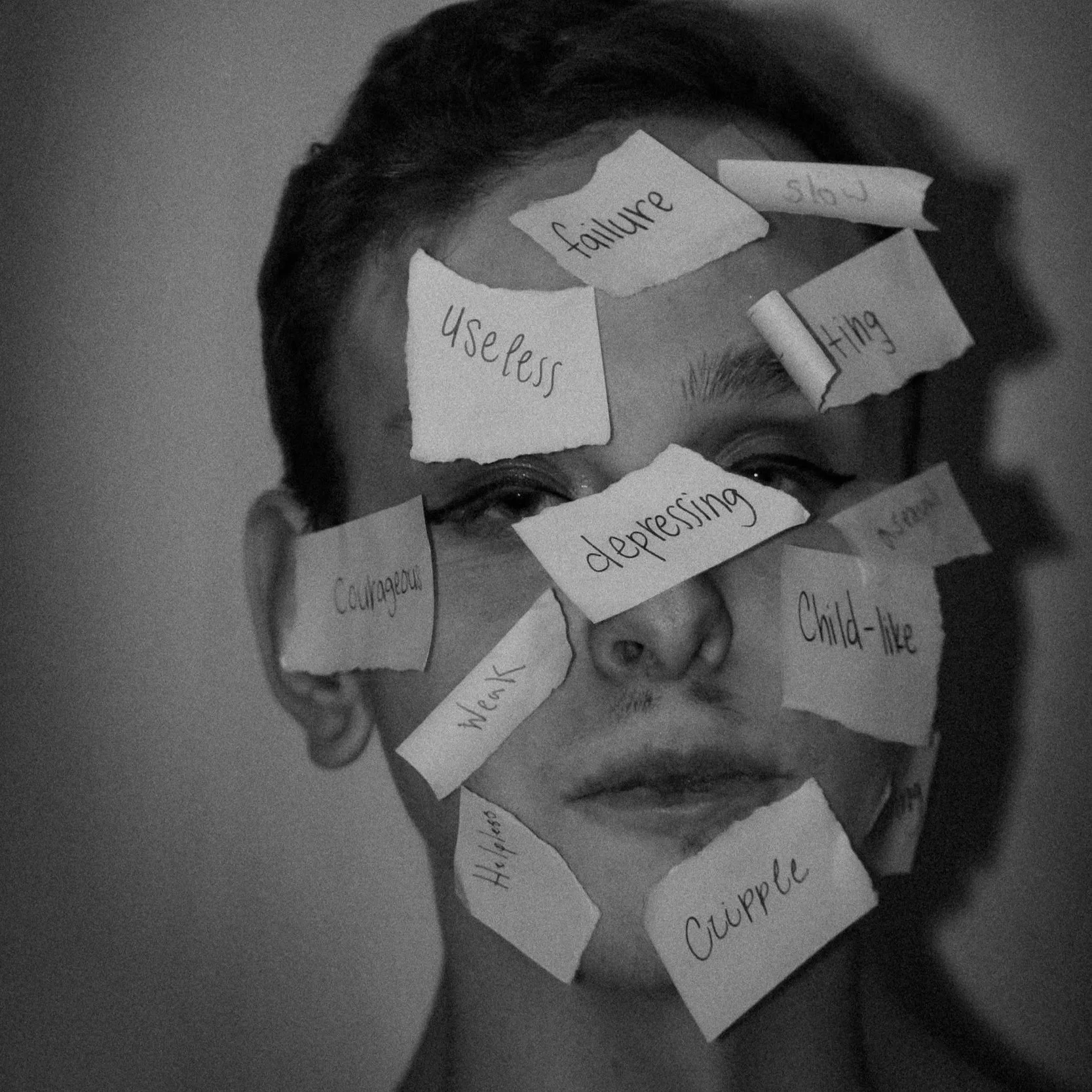
You probably know that voice inside. The one that tells you you're an idiot when you make a mistake. Or maybe you have a part that replays every awkward thing you said at last week's dinner party.
I hear about this voice almost every day in my counselling practice. People tell me they're exhausted from being their own worst critic. They want it to stop, but nothing seems to work. Positive affirmations feel fake. Trying to "think positive" lasts about five minutes. And the harder they fight it, the louder it gets.
Most of us have an inner critic, and it can feel impossible to escape. But what if I told you that your inner critic isn't the enemy? What if, instead of trying to silence it, you could actually understand why it's there and help it relax?
That's exactly what Internal Family Systems (IFS) therapy offers.
IFS: A Different Way of Looking at Your Inner Critic and Your Mind
Internal Family Systems therapy (we usually just call it IFS) starts from a pretty different premise than most therapy approaches. Instead of seeing your mind as one unified thing, IFS recognises that we all have different parts.
Think about it. Haven't you ever said "part of me wants to go to the party, but another part just wants to stay home"? Or "part of me knows I should leave this job, but I'm scared"?
We're not making this up. These parts are real. And your inner critic is one of them.
Dr. Richard Schwartz developed IFS after noticing that his clients often talked about themselves this way. When he started working directly with these parts (by asking them questions and getting curious about them) something remarkable happened. People healed in ways that surprised everyone, including him.
Why Your Inner Critic Won't Leave You Alone
Here's the thing about your inner critic that most people don't realise: it's actually trying to help you.
I know that sounds absurd when it's telling you you're useless or that everyone thinks you're stupid. But stay with me.
Your inner critic usually developed when you were young. Maybe you had parents who were hard to please, or you got bullied at school, or you were the kid who had to be perfect to feel safe. Whatever happened, your mind came up with a strategy: if I criticize myself first, maybe it won't hurt as much when others do. If I point out all my flaws, I can fix them before anyone else notices. If I never let myself relax, I won't fail.
It's protection. (It's just really, really harsh protection that doesn't work very well anymore!)
What Working with An Inner Critic in IFS Actually Looks Like
Instead of trying to get rid of your inner critic or drown it out with positive thinking, IFS takes a completely different approach. We get to know it.
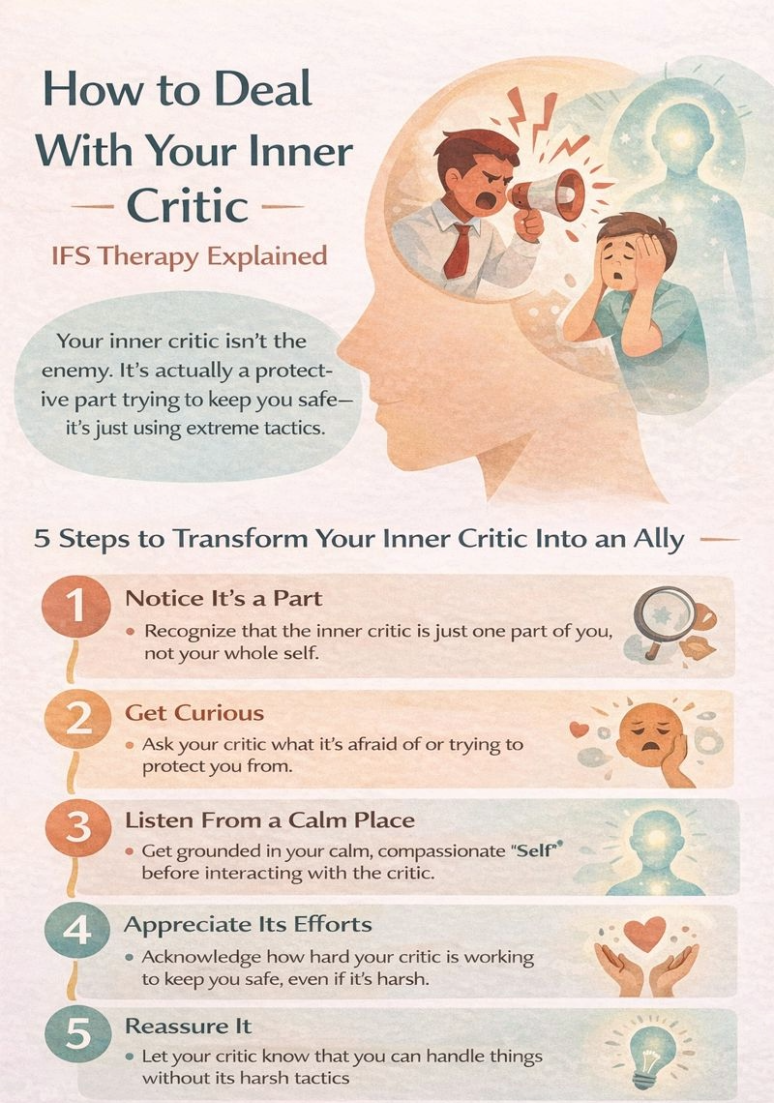
Step One: Notice It's a Part
Next time your inner critic pipes up, try this: instead of thinking "I'm so stupid," notice "a part of me is saying I'm stupid."
It's a small shift, but it's huge. Suddenly you're not the criticism. Instead, you're the person noticing a part that is being critical.
Step Two: Get Curious
This is where it gets interesting. Once you've got a bit of distance from your critic, you can actually ask it some questions.
What are you worried about? What are you trying to protect me from?
You might feel ridiculous at first, talking to a part of yourself. But try it. You might be surprised by what comes up. Often, you'll sense that your critic is genuinely scared. For example, it may be scared you'll get rejected, humiliated, fired, or abandoned.
Step Three: Listen From a Calm Place
IFS calls this grounded, clear part of you "Self." It's the part that can be curious and compassionate, even toward the critic beating you up.
When you're in Self, you can actually hear what your critic is worried about without getting defensive or overwhelmed. You might even feel a bit of compassion for it as this part has been working overtime trying to keep you safe (even if its methods are terrible).
Step Four: Appreciate It (Yes, Really)
Once you understand what your critic is protecting you from, you can actually thank it. "Thanks for trying to keep me safe. I can see you're really worried I'll get hurt."
This isn't about agreeing with everything your critic says. It's about acknowledging that it has a purpose, even if it's going about things badly.
And here's what's wild: when you do this, the critic often softens. It doesn't have to shout so loud when it knows you're listening.
Step Five: Let It Know You've Got This
The ultimate goal is to let your critic know that the true, larger you (your Self) can handle things. It doesn't need to protect you in such harsh ways anymore.
Sometimes critics are willing to take on a different role. Instead of being a drill sergeant, maybe it becomes more of a consultant. Instead of screaming "YOU'RE GOING TO FAIL," it might say "hey, this is risky, let's think it through."
What Change Looks Like
I've seen different people work with their inner critics this way for years now, and the shifts are remarkable.
It's not that the critical voice disappears completely. But it gets quieter. It speaks up less often. And when it does, you can hear the worry underneath the harshness, which makes it much easier to deal with.
People tell me they can make decisions without second-guessing themselves for days. They take risks they've been avoiding for years. They stop apologising for everything. They're just... easier on themselves.
The Truth About Living With Your Inner Critic
Look, your inner critic isn't going anywhere completely. But it doesn't have to run your life.
After working with hundreds of people on this, I can tell you: the relationship you have with yourself matters more than almost anything else. When you stop being at war with your own mind, everything gets easier.
You make better decisions. You show up more authentically in relationships. You take the risks that matter. You sleep better. You enjoy things more.
Need Support with your Inner Critic?
If you're tired of your inner critic running the show and you're curious about how IFS could help, let's talk.
About the Author
Corene Crossin is an Australian registered psychotherapist and IFS practitioner based in Brisbane, offering online Internal Family Systems therapy to clients across Australia and internationally. She works with thoughtful adults who are ready to explore longstanding patterns around relationships, attachment, self-sabotage, body image, and inner criticism.
Her approach is trauma-informed, collaborative, and rooted in compassion. She believes that lasting change becomes possible when you feel safe enough to be fully seen, including by yourself.
Ready to begin your own inner work?
Download the free IFS Parts Mapping Guide to start exploring your parts, or book a free 20-minute connection call to discuss how IFS therapy might support you.
Explore other articles:
What is the “Self” in IFS therapy?
Can You Do IFS Therapy By Yourself? A Guide to Self-Led Parts Work
