Body Image and IFS: A Compassionate Approach to Healing
TL;DR
IFS therapy offers a different approach to body image that drops the internal struggle you feel about your body.
It may sound strange at first, but often the parts of you that struggle with body image are often trying to keep you safe from rejection, judgment, or pain. IFS therapy helps you understand these parts.
When you approach parts who hold onto beliefs about your body with curiosity instead of judgment, they can release their extreme roles.
Healing body image with IFS doesn't mean forcing yourself to "love your body." It means building a relationship with yourself is peaceful and compassionate (from the inside out).
Ready to explore this approach? Book a free connection call with me or scroll down to read more.
You probably know that voice in your head that tells you are fat, or another part that won't let you eat certain foods or demands you cover up at the beach. The experience of the parts within us that relentlessly remind us that our bodies do not match society’s “ideal” can be torture. When we listen to these parts, we can spiral into deep insecurity and even self-hatred.
But battling against these parts can feel like an un-winnable internal war.
If you have been struggling with body image, Internal Family Systems offers a different way to end this war. IFS asks: what if instead of fighting these voices, you could understand what they're actually trying to do?
What Is Internal Family Systems Therapy?
IFS therapy sees your mind as a family of different parts. Each part has its own view, feelings, and job.
Think about the last time you felt conflicted about food. One part wanted the chocolate. Another part judged you for wanting it. A third part just wanted everyone to shut up so you could make a decision. This is an example of some of the parts within you that make up your internal system.
These parts aren't random. They developed for good reasons, usually to protect you from pain or help you survive difficult situations.
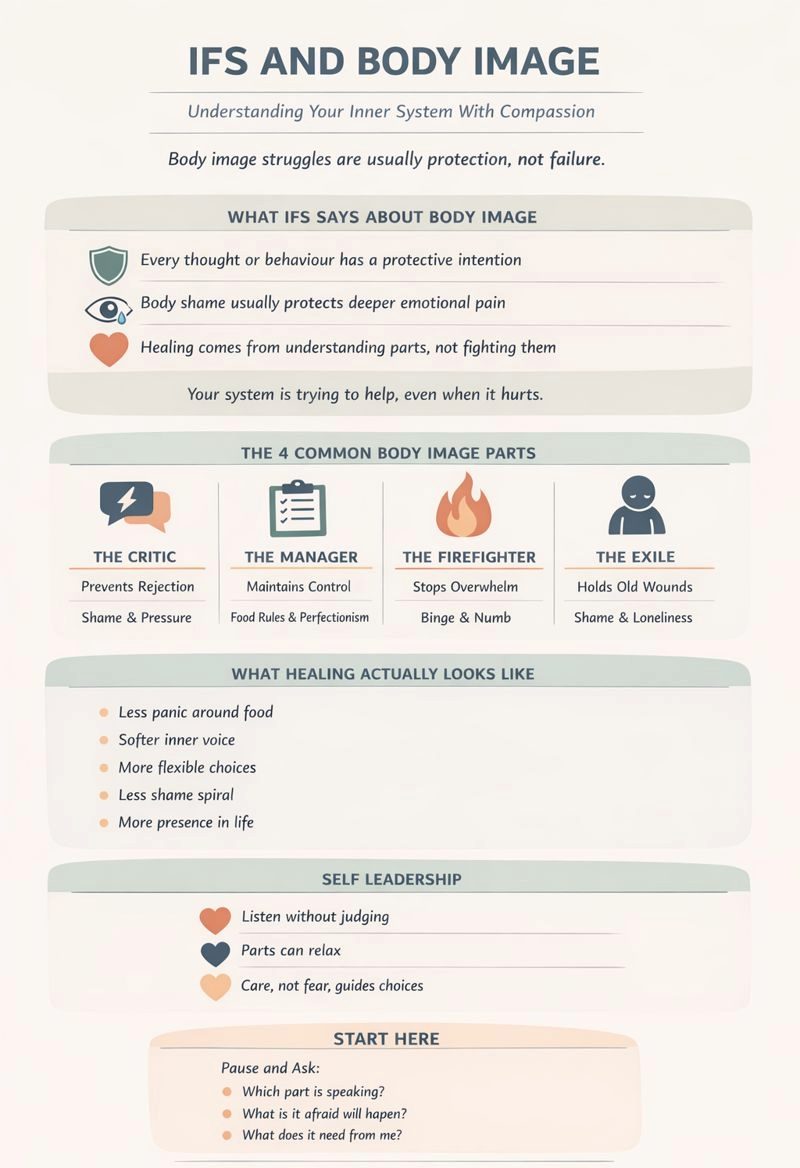
You've got Protectors that work to keep you safe. They use different strategies, but their goal is the same: prevent you from getting hurt.
You've got Exiles that carry the wounds and painful emotions your protectors work so hard to keep buried. These are often young parts of you that experienced rejection, shame, or trauma.
And you've got your core Self at the centre. This isn't another part. It's your core that can lead with calm, curiosity, and compassion. When you're in Self, you can listen to your parts without being overwhelmed by them.
The goaln in IFS isn't to eliminate parts. It's to help them work together under the leadership of your Self.
How Protection Can Hide Within Criticism
The idea that your harsh inner critic isn't trying to destroy you, and that instead it is trying to protect you sounds crazy, right?
But think about it. If you criticise yourself first, maybe others won't. If you control your body perfectly, maybe you'll be safe from judgment. If you make yourself small enough, maybe you won't be rejected.
Your body image issues make complete sense when you understand what your parts are protecting you from.
This goes for whether you have disordered eating patterns, a full eating disorder, or just a painful relationship with your body. The protective strategies might look different, but the system works the same way.
You may recognise some of these parts within yourself:
Manager parts that set rigid rules about what you can eat, when, and how much. They may want you to exercise on a strict schedule.
Protective parts that avoid certain clothes or situations where your body might be visible. They compare your body to others to figure out where you stand.
Parts that step in when you feel totally overwhelmed or defeated. These parts can use binge eating to help you to numb feelings, or excessive exercise as a form of self-punishment.
The problem with these parts is that their solutions create more internal suffering in the long run. The battle is endless and it's exhausting.

How IFS Is Different
Most therapy approaches to body image try to change your thoughts or challenging negative beliefs. These approaches have merit and can be powerfully helpful.
IFS takes a different path.
Instead of trying to think differently, you get gently curious about why your parts are here. What is this critical voice protecting you from? What does it fear will happen if you accept your body?
Instead of battling with parts, you build a calmer, more compassionate relationship with them.
This matters because you can't force parts to change. Trying to override them with positive thinking often creates even more internal conflict.
Parts need to be heard before they'll consider doing things differently. When parts feel understood, they soften and become less extreme.
The real healing happens when you address the wounds the parts are protecting, not just manage the symptoms.
Self Leadership
The goal of IFS is to help your Self lead your internal system.
When you're in Self, you have access to what IFS calls the 8 Cs: calmness, curiosity, clarity, compassion, confidence, courage, creativity, and connectedness.
From this place, you can listen to your Critic without believing everything it says or fighting against it. You can appreciate your Managers for working so hard while helping them find less exhausting strategies. You can thank your Firefighters for trying to help while offering them better tools. You can spend time with your Exiles and offer them what they needed but didn't get back then.
This is Self leadership. Your parts still exist, but they don't have to work so hard anymore because your Self is present.

What Healing Body Image Looks Like With IFS
Healing your relationship with your body through IFS doesn't mean you wake up one day loving every inch of yourself.
It means you can look in the mirror without spiralling. You notice critical thoughts but don't get hijacked by them. You make choices about food based on what feels good, not what you deserve. You move your body in ways that feel nurturing instead of punishing. You can receive a compliment without immediately dismissing it. You wear clothes that you actually like instead of whatever hides you best. You participate in your own life.
You have hard days, but you have tools to meet yourself with compassion instead of shame.
Your parts are still there. The Critic might still chime in sometimes. Your Managers might still want to plan and control. But you have a relationship with these parts now. You can notice when they're activated. You can check in with them. You can help them without letting them take over completely.
Try This
Next time you have a critical thought about your body, try this:
Pause. Don't believe the thought or fight it. Just notice it's there.
Get curious. Ask: what part of me is speaking right now? How old does this part feel? What is it worried about?
Listen. You might get images, feelings, words, or just a sense of something. Trust whatever comes.
Respond with compassion. Talk to this part like you'd talk to a scared friend. What does it need to hear? What would help it feel safer?
This might feel weird at first. That's normal. You're building a new relationship with yourself.
Why Work With a IFS Therapist Can Help With Body Image
You can learn about IFS and start exploring your parts on your own. I have written a guide on how to start IFS by yourself, and also have created a free parts mapping guide to get you started.
But working with a therapist trained in IFS offers something different.
A therapist can help you access your Self when parts are overwhelming and you can't find your way there alone.They can guide you when you get stuck or when parts don't want to be explored. They can see patterns you might miss. They can hold safe space for the big feelings without getting overwhelmed themselves.
Your Next Step
If you're exhausted from fighting with your body, there's another way.
You don't have to keep trying to think your way out of this. You don't have to force yourself to love your body through sheer willpower. You don't have to white knuckle your way through another diet or self improvement plan. You are welcome to book a free 20-minute connection call to discuss how IFS therapy might support you.
About the Author
Corene Crossin is an Australian registered psychotherapist and IFS practitioner based in Brisbane, offering online Internal Family Systems therapy to clients across Australia and internationally. She works with thoughtful adults who are ready to explore longstanding patterns around relationships, attachment, self-sabotage, body image, and inner criticism.
Her approach is trauma-informed, collaborative, and rooted in compassion. She believes that lasting change becomes possible when you feel safe enough to be fully seen, including by yourself.
Ready to begin your own inner work? Download the free IFS Parts Mapping Guide to start exploring your parts.
Explore other articles:
What is the “Self” in IFS therapy?
Can You Do IFS Therapy By Yourself? A Guide to Self-Led Parts Work
