Mapping Your Parts in IFS: How To Get Started
Have you ever felt like one part of you wants to rest while another pushes you to keep going? Or that you can feel both excited about a new opportunity and scared to take it?
Internal Family Systems (IFS) therapy calls these different voices or impulses parts, and mapping them out can be a powerful step toward self-understanding, healing and growth. In this article I outline some tips on getting started with mapping your parts, plus offer you a free gift (a parts mapping guide).
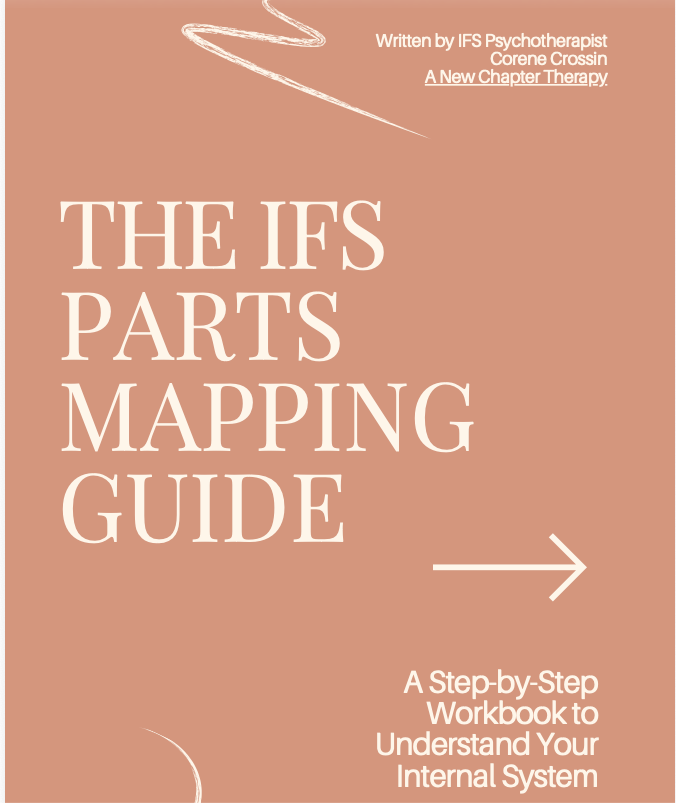
I have developed a FS Parts Mapping guide. Continue to read for the link to download for free.
What Does It Mean to “Map Your Parts”?
In IFS, the mind is seen as a system of many parts. Each part has its own role, feelings, and strategies for protecting you. Some are critical, others are playful, some carry pain, and others keep you moving forward.
Mapping your parts means gently noticing and writing down these inner voices so you can see the bigger picture of your inner world. Instead of feeling like you’re “all over the place,” you begin to understand that your system makes sense, and every part has a reason for being there.
Why Mapping Parts Is Helpful
When you map your parts, you may notice:
Patterns of self-sabotage or procrastination
The protective roles of inner critics or perfectionists
Younger parts that carry sadness, fear, or shame
Manager parts that try to control or organise everything
Firefighter parts that use distraction, avoidance, or even overwork to cope
Bringing these patterns into view helps you relate to yourself with more compassion. You stop fighting against yourself and start building inner trust.
How to Begin Mapping Your Parts
You don’t need any special tools to begin - just a notebook, a blank page, or even sticky notes. Here are a few beginning steps to try:
Pause and Notice
The next time you feel a strong emotion or reaction, ask yourself: What part of me is showing up right now?Name the Part
Give it a short description or name, like “The Worrier,” “The Driver,” or “The Younger One.”Note Its Role
Ask: What is this part trying to do for me? Often, even critical parts are trying to keep you safe.Map the Relationships
Place different parts on paper and draw lines or arrows showing how they interact. Who argues with who, who steps in to protect, who hides?Stay Curious and Kind
The aim isn’t to judge or get rid of parts. It’s to listen and learn from them.
Ready to Start With Mapping Your Parts? I have a free gift for you.
Understanding your internal system begins with visualisation. To help you get started I've created a 16-page guide that includes:
✓ 3 different mapping methods for different purposes and styles
✓ Step-by-step instructions with real examples
✓ Troubleshooting guide for common challenges
✓ How to use maps for actual healing (not just awareness)
✓ Visual examples of what each type of map looks like
Fill in the form below for instant access to the guide.
Start Your Parts Work Journey
IFS therapy and mapping is not about controlling your parts or “getting rid” of them. Instead, in IFS we work to develop a compassionate relationship with all our parts to ease the burdens they carry.
Over time, parts mapping helps you:
Recognise repeating patterns in your inner world
Respond to parts with kindness rather than judgment
Strengthen your relationship between Self (your true calm, grounded essence) and your parts
If you’d like to get to know your parts with support, IFS therapy can help. I develop collaborative (online) parts maps with all my clients as part of therapy to help bring clarity and balance.
You are welcome to book a free 20 minute connection call with me to begin exploring your parts in a compassionate way.
Check out other articles:
How Do I Explain IFS Therapy to My Partner?
